
The tea is poured quickly, relatives step forward in an order that may shift without warning, and some of the most memorable expressions appear between the formal poses, especially when a Chinese wife is sharing a tradition that carries deep meaning for her family. A strong tea ceremony gallery should capture both the ritual and the family rhythm surrounding it. This checklist helps photographers and couples plan Chinese tea ceremony photos with enough structure to avoid missing important moments while still leaving space for the quiet, unscripted gestures that make the images feel personal.
Which Chinese tea ceremony photos are essential?
Begin with the images that explain the ceremony clearly to someone who was not in the room. The couple’s preparation, the tea set, the first serving, the elders receiving tea, and the formal group portraits form the backbone. These are not merely record shots. They show who was honored, how the family was arranged, and the pace of the morning.
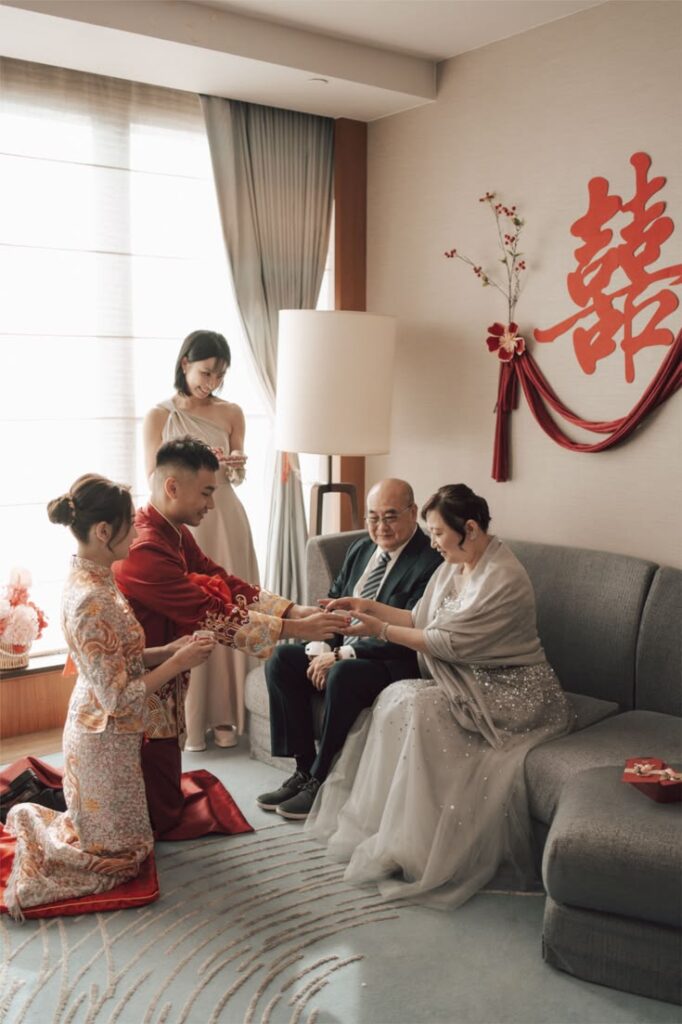
For Chinese tea ceremony photos, the most useful coverage usually includes a wide view of the room before the ceremony begins, a medium frame of each exchange, and a close view of hands holding the cup. That three-part approach gives the final album context without turning every serving into a long sequence of nearly identical images.
- The couple entering or taking their places
- Tea being prepared and poured
- Each elder receiving a cup
- Jewelry, red envelopes, or gifts being presented
- A respectful bow or spoken thanks, where included
- Immediate family portraits before people scatter
Not every household follows the same order or uses the same objects. Some families serve tea to parents first, then grandparents and senior relatives. Others combine the tea ceremony with door games, a family blessing, or a later banquet tradition. Confirming the sequence in advance is more useful than relying on a generic wedding timeline.
What should you photograph before guests arrive?
Before the room fills, there is a brief window to photograph the setting without coats on chairs, phones on tables, or relatives moving through every frame. It is also the best time to check whether the space has enough room for the couple, parents, and photographer to move without blocking one another.
Photograph the room from the doorway and from the couple’s position. Include any red backdrop, double-happiness decoration, family altar, floral arrangements, or chairs set aside for elders. These details locate the ceremony in a particular home, hotel suite, restaurant room, or family gathering space. They matter later, especially when the day moves quickly between locations.
Preparation photographs can be especially revealing. A mother fastening a qipao collar, a sibling laying out cups, or a relative checking the serving tray often says more about the morning than a staged flat lay. Keep the framing tidy, but do not clear away every sign of activity. Folded garments, a bag of mandarins, and a family member carrying extra cups can belong in the story.
A photographer should also ask who has final authority over the order of service. It may be a parent, an aunt, a wedding coordinator, or the couple themselves. Knowing that person prevents awkward pauses once grandparents are seated and everyone is waiting to be called.
Which tea set details need close-ups?
The tea set deserves a few careful images, not an entire chapter of the gallery. Its material, color, and decorations can carry family preference, a gift from relatives, or a design chosen to complement the wedding attire. A close-up works best before the tea is poured, when cups are clean and the tray is still orderly.
Look for the teapot lid, cup rims, tray pattern, and the hands arranging the set. If there are red dates, lotus seeds, longans, or other ingredients prepared for sweet tea, photograph them as part of the setup rather than treating them as mysterious symbols requiring a broad explanation. Families may use them differently, and a simple visual record is often the most accurate one.
Light can make or break these frames. Glossy porcelain catches window glare, while gold details can disappear in a dark room. Move the tray nearer to soft light if possible, or photograph from an angle that preserves the pattern without placing the photographer’s reflection in every cup.
The same restraint applies to clothing details. Capture embroidered sleeves lifting a cup, a groom’s hands steadying the tray, or a bride’s jewelry against red fabric. These close images give Chinese tea ceremony photos texture and breathing room between the larger family moments.
How do you capture the serving sequence?
The serving sequence moves faster than it appears in a finished album. An elder may be seated, served, thanked, gifted, and replaced by the next relative within a minute or two. A photographer who waits only for a perfect expression can miss the cup being handed over, which is often the clearest part of the ritual.
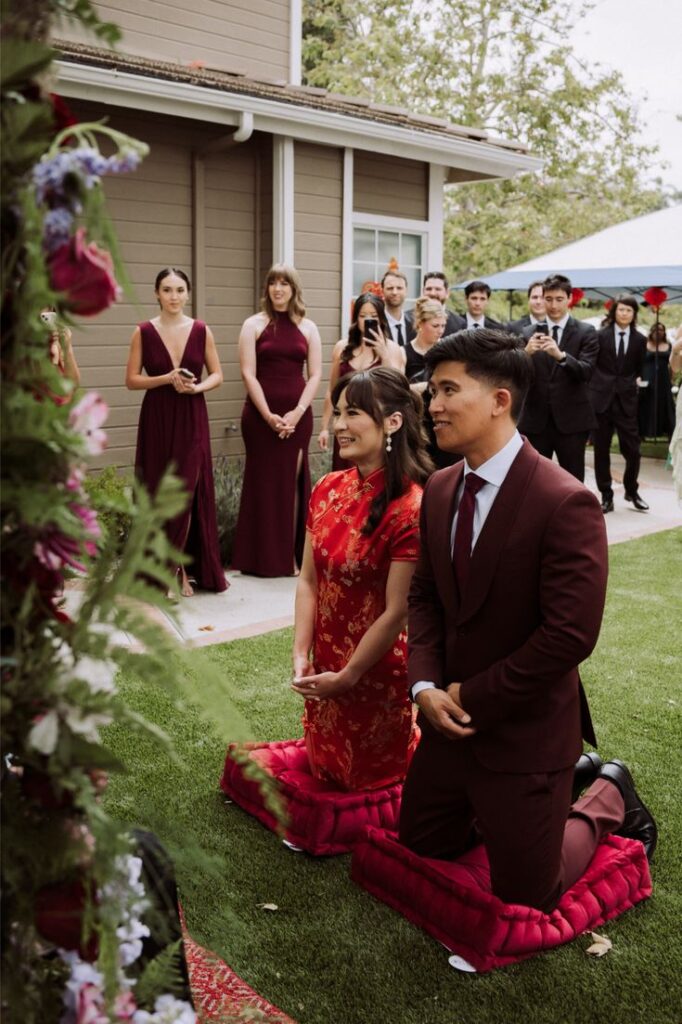
Work in a repeatable rhythm: establish the pair, photograph the offering, then watch for the exchange afterward. The final beat may be a red envelope placed in the couple’s hand, a necklace being fastened, a hug, or a quiet conversation. Those reactions are usually where each family becomes distinct.
Positioning matters. Stand slightly to one side of the serving line rather than directly behind the elder, where the couple’s faces can be hidden. A second angle from the opposite side is valuable when available, but a single photographer can still cover the event well by anticipating the next seat and moving during transitions.
It helps to ask whether relatives will be called by generation, branch of the family, or a written list. Names can be unfamiliar, and the line may include godparents or close family friends. Rather than guessing, keep a printed or phone-based order nearby. This is a simple way to ensure Chinese wedding traditions are documented with the people who actually hold meaning for the couple.
Where should parents stand for photos?
Parents are often asked to sit for the serving portion, then stand for portraits immediately afterward. Reserving a clear spot for both stages keeps the room from becoming a loose crowd of well-meaning relatives with phones raised in front of the couple.
For the ceremony itself, parents usually look most natural seated beside one another, with enough space for the couple to kneel, bow, or offer tea according to the family’s plan. Avoid placing them so close to a wall that there is no room for a clean side angle. If the space is tight, move decorative items rather than making older relatives repeatedly adjust their chairs.
For portraits, start with the couple and each set of parents. Then add siblings, grandparents, and other relatives in planned groups. Keep the parents near the center, but do not force a rigid arrangement when someone needs a chair or has difficulty standing. Comfort shows in faces, while an uncomfortable five-minute pose session shows too.
In a mixed-language family, one person should give the instructions clearly and briefly. A cousin who can call names in both languages can save surprising amounts of time. The photographer can then focus on expressions, hands, and eye lines instead of trying to organize every grouping alone.
What reactions should photographers anticipate?
Formal tea service often produces informal reactions. A stern-looking grandfather may soften as the cup reaches him. A parent may laugh when a gift is opened. Younger siblings may look restless until they are pulled into a hug. These moments are worth watching for because they offset the composed ceremonial frames.
Do not assume every family will be openly emotional. Some show affection through careful instructions, practical gifts, teasing comments, or a parent quietly straightening the couple’s clothing. Photograph those gestures with the same attention given to tears. Emotional range is wider than one familiar wedding image.
During Chinese tea ceremony photos, keep an eye on the people who are not being served at that exact moment. Grandparents watching from the side, an aunt holding a child, or a father checking that the tray is balanced can offer strong supporting images. A wide lens used thoughtfully can hold both the couple and the waiting family without making the room feel chaotic.
One common mistake is focusing entirely on the bride and groom during the gift exchange. Gifts may be presented quickly, and the giver’s face can be more revealing than the object itself. Capture the handoff, then lift the frame for the response. That small shift makes the image about the relationship between generations rather than about a package or envelope.
Which family pairings need formal portraits?
The portrait list is easiest to manage before the ceremony, when the couple can identify the combinations that matter. Start with the standard groups, but leave room for family structures that do not fit a simple parent-sibling pattern. Step-parents, grandparents who raised a child, godparents, close cousins, and relatives visiting from far away may deserve their own frame.
A useful order is to photograph the oldest relatives first, then work outward through immediate family. That respects their comfort and prevents a grandparent from standing through twenty combinations. It also makes the later part of the session more flexible, since younger relatives can wait while larger groups are assembled.
- Couple with both sets of parents, where everyone is present;
- Couple with each parent or parent pair separately;
- Couple with grandparents and senior relatives;
- Couple with siblings and siblings’ partners or children;
- Couple with the full family group from each side.
Do not let the portrait list erase the family’s actual dynamics. One partner may want a quiet portrait with her mother before joining a large group, while the other may have a meaningful relationship with an uncle who helped organize the day. Build those requests into the schedule. The best formal frames feel orderly, but not interchangeable.
How can Chinese wife tea ceremony photos feel personal?
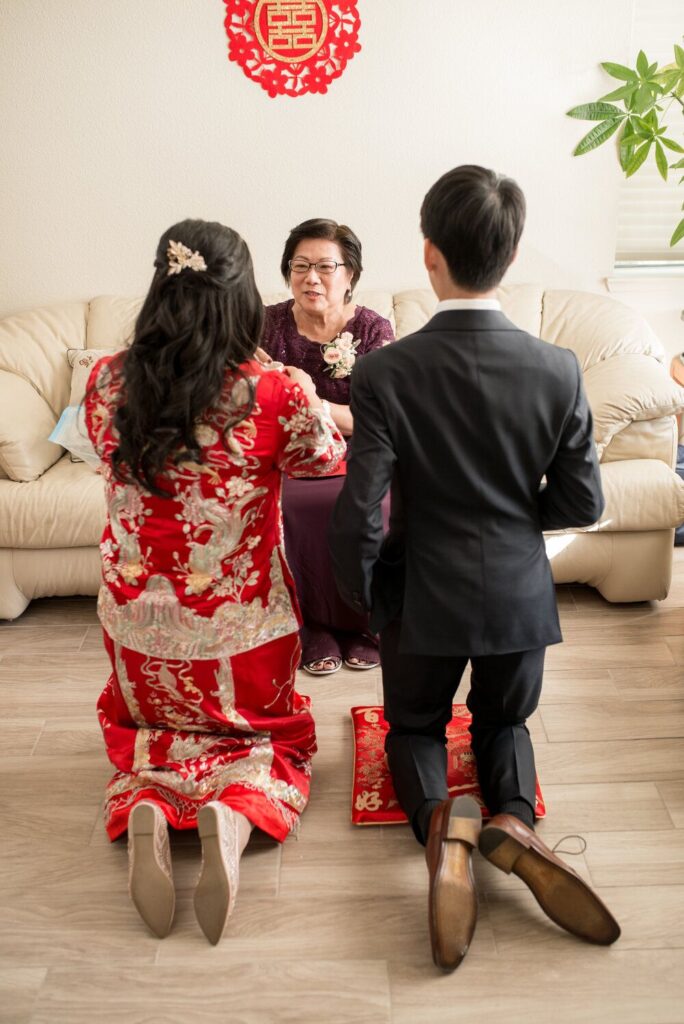
Personal images come from attention to the couple’s own routines, not from adding more props or directing bigger reactions. Ask what the tea ceremony means in this family. It may be a reunion after years apart, the first time both households are together, or a familiar rite adapted for a smaller modern wedding.
The phrase Chinese wife tea ceremony can sound narrow if it suggests there is one correct version of the event. In practice, the couple may be from different Chinese regions, part of a mixed-culture family, or simply choosing the parts of the ceremony that fit their day. The photographs should reflect their decisions without turning every detail into a lesson for outsiders.
Look for personal markers already present: a tea set borrowed from a grandmother, a parent’s handwritten seating list, a sibling translating jokes, or a couple choosing to serve a relative who has been central to their home life. Those are the frames that will still make sense decades later.
For a broader view of how images carry a wedding day from preparation through family portraits, thoughtful wedding photography coverage is less about constant posing and more about being ready for the next small exchange. The ceremony is structured, but the warmth around it cannot be scheduled.
A reliable checklist protects the essential moments: tea, elders, gifts, portraits, and the room before it changes. Then let the family set the tone. Chinese tea ceremony photos are strongest when they preserve the ritual clearly and leave space for the glances, jokes, and careful gestures that belong to one household alone.